Alma Harmony XL Pro Laser Treatments in Orlando, Florida: Benefits and Outcomes Patients Can Expect
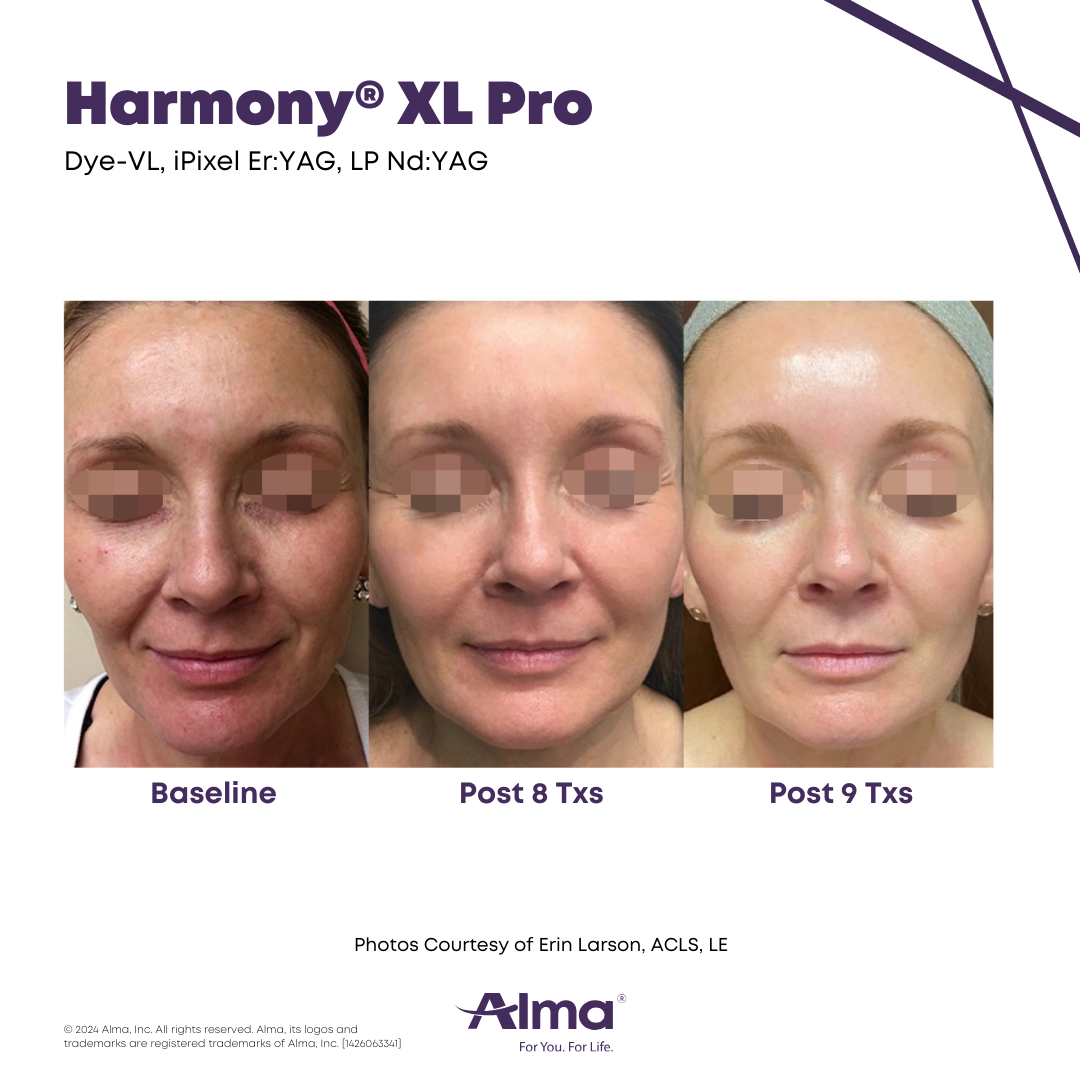
The Alma Harmony XL Pro is a single laser and light platform that holds multiple FDA-cleared technologies for hair removal, tattoo removal, vein treatment, pigmented lesion removal, skin tightening, acne, and scar revision. At APMUC in Orlando, Florida, every treatment is performed under the supervision of Dr. Saied Shemiranei, medical director and founder.
© Alma, Inc. All rights reserved. Alma and its logos are registered trademarks of Alma, Inc.
Patients at APMUC in Orlando, Florida typically see meaningful Alma Harmony XL Pro results in one to nine sessions depending on the treatment, with most appointments fitting inside a lunch break and little or no downtime. Every laser session is performed under the supervision of Dr. Saied Shemiranei, medical director and founder, on a platform validated for Fitzpatrick skin types I through VI.
FDA-cleared platform
Multi-application laser and light technology on one device.
All skin tones
Validated for Fitzpatrick types I through VI.
1 to 9 sessions
Most appointments fit inside a lunch break.
Little to no downtime
Most return to normal activity the same day.
What the Alma Harmony XL Pro actually is
The Alma Harmony XL Pro is an FDA-cleared multi-application laser and light platform built by Alma Lasers. It combines multiple laser wavelengths and light technologies on one device, including Q-switched Nd:YAG ClearLift, long-pulsed Nd:YAG, Dye-VL (a 500 to 600 nanometer wavelength tuned for vascular and pigmented lesions), Super Hair Removal (SHR Pro) for hair removal across all skin tones, iPixel Er:YAG (a 2,940 nanometer fractional ablative laser), ClearSkin Pro Er:Glass (a 1,540 nanometer non-ablative laser for acne and acne scars), AFT (Advanced Fluorescence Technology) for inflammatory acne, NIR Face for dermal heating, and ClearTite for skin tightening.
Translated into plain English: the Harmony XL Pro is the difference between a clinic that has one laser and one job it can do, and a clinic that has the full toolkit on a single platform. The same device that does laser hair removal can also treat brown spots, leg veins, fine lines, surgical scars, and stubborn toenail fungus. That is unusual in the Orlando, Florida market.
The Harmony XL Pro is the platform Dr. Shemiranei selected for APMUC after evaluating the systems used by hospital-affiliated dermatology and aesthetic medicine groups. He chose it because it brings the major FDA-cleared laser and light technologies onto one medical-grade device, is validated for every skin tone, and fits the safety standard a primary care and urgent care physician can stand behind for his patients.
The five benefits Orlando, Florida patients ask about most
- One consultation instead of four. The most common reason patients come to APMUC for laser care is that they are tired of being sent to a different practice for every concern. The Harmony XL Pro consolidates hair, veins, pigment, tattoos, tightening, and acne under one roof, with one provider, one chart, and one written plan.
- Safety for darker skin tones. Older laser systems can burn or hyperpigment darker skin. The Harmony XL Pro is clinically validated for Fitzpatrick skin types I through VI. The SHR Pro applicator in particular was designed specifically to deliver safe and effective hair removal across the full range of skin tones, including African American, Latino, South Asian, and Middle Eastern patients.
- Comfort. Alma’s In-Motion technique gradually heats the target tissue while a sapphire-tipped cooling surface protects the skin. Most patients describe the sensation as warm pressure rather than the snap or sting they remember from older lasers. For tattoo removal, the sensation is briefly sharper and topical numbing is available.
- Speed. Treatment sessions are short. A man’s full back can be hair-removed in roughly thirty minutes. A woman’s full legs can be done in a similar window. Facial pigmentation or rejuvenation often runs fifteen to thirty minutes. Many patients schedule on a lunch break.
- Visible results without downtime. Most Harmony XL Pro treatments leave the skin slightly pink for a few hours and that is the extent of recovery. Even fractional resurfacing with iPixel Er:YAG, which is the most aggressive setting we use, recovers within several days.
How outcomes are measured at APMUC
Outcomes only mean something if they are documented. At APMUC, every laser patient is photographed under standardized conditions before the first session, with the same camera position, the same lighting, and the same distance. The same photos are repeated at every follow-up. That is how we know what is improving, how fast, and what to adjust.
We also keep a written treatment log for every patient, with applicator, wavelength, fluence, pulse duration, and the specific skin response observed at the session. If a setting did not produce the expected result, we change it next time. If a setting produced a strong result, we hold it.
This is not how every laser clinic operates. It is how a medical practice operates.
Realistic outcomes by treatment area
Laser hair removal
Most patients see meaningful hair reduction after the first treatment, with full reduction over a series of three to six sessions spaced one to three months apart. Coarser, darker hair responds fastest. Finer or lighter hair takes more sessions. Hormone-driven hair growth on the face and chin in women often benefits from maintenance sessions one to two times a year after the main series.
What permanent hair reduction means clinically: a stable, long-term reduction in the number of hairs regrowing after a course of treatment. It is the FDA-cleared term and it is the honest one. Hair removal is not the same as a guaranteed lifelong absence of every hair.
Tattoo removal

Tattoo removal is the longest-timeline laser treatment we offer. The Q-switched ClearLift breaks ink into fragments small enough for the immune system to carry away over time. Plan on six to twelve sessions, spaced six to eight weeks apart, for a typical professional tattoo. Amateur tattoos and cosmetic tattoos can clear in fewer sessions. Multi-colored tattoos take longer because each color responds to a specific wavelength. Most patients see visible fading after the first one or two sessions. The most dramatic reductions usually come in sessions four through eight.
Vein treatment, face and legs
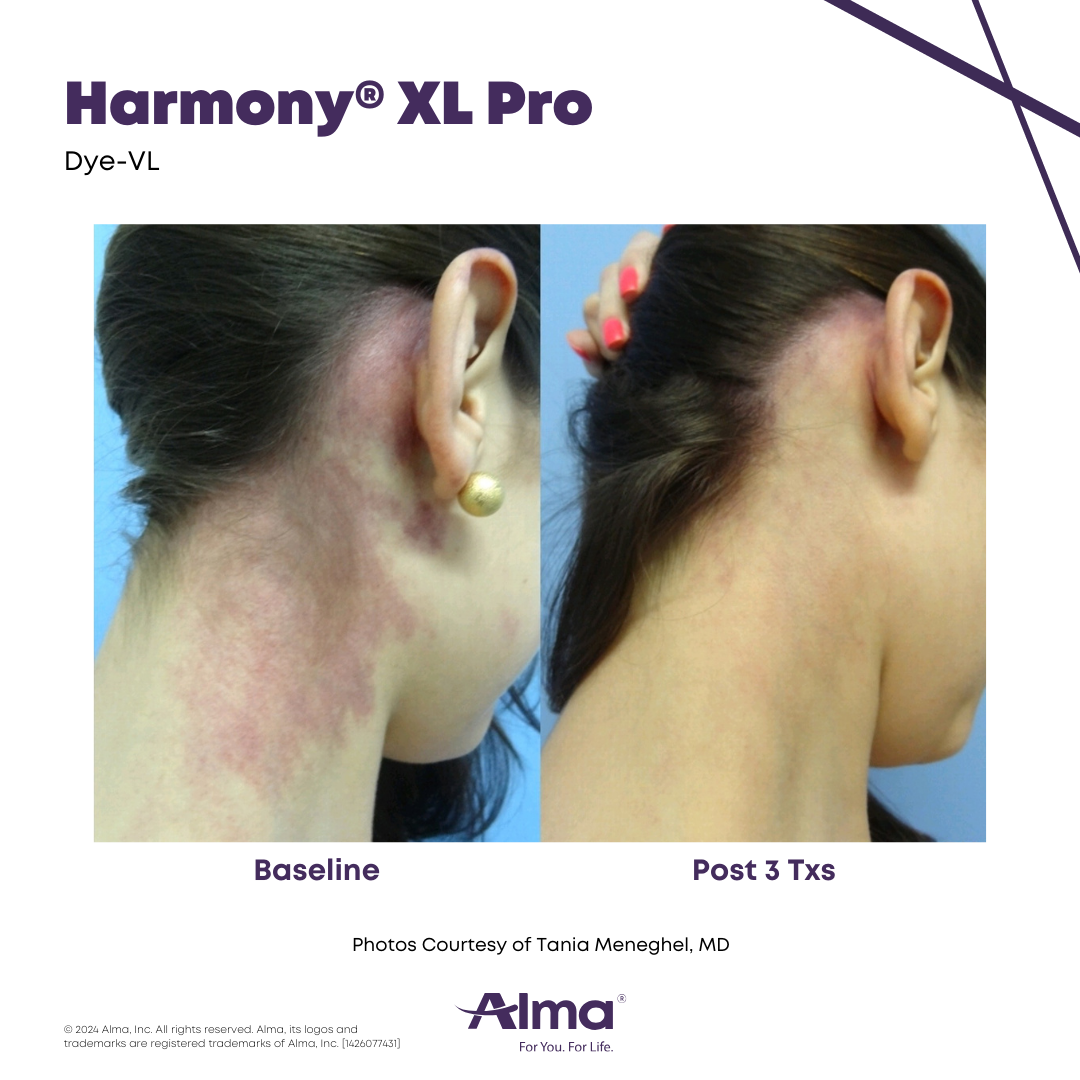
Spider veins on the face often clear in one to three sessions with the Dye-VL or the long-pulsed Nd:YAG, depending on vessel size and depth. Diffuse facial redness from rosacea can soften in one session and continue improving over a series of three to five.
Leg veins take longer. Small surface spider veins less than 1 millimeter respond well to laser. Larger reticular and varicose veins are evaluated case by case, and some patients are better served by sclerotherapy or a vascular surgery referral, which we will tell you honestly during the consultation.
Pigmented lesions and sun spots
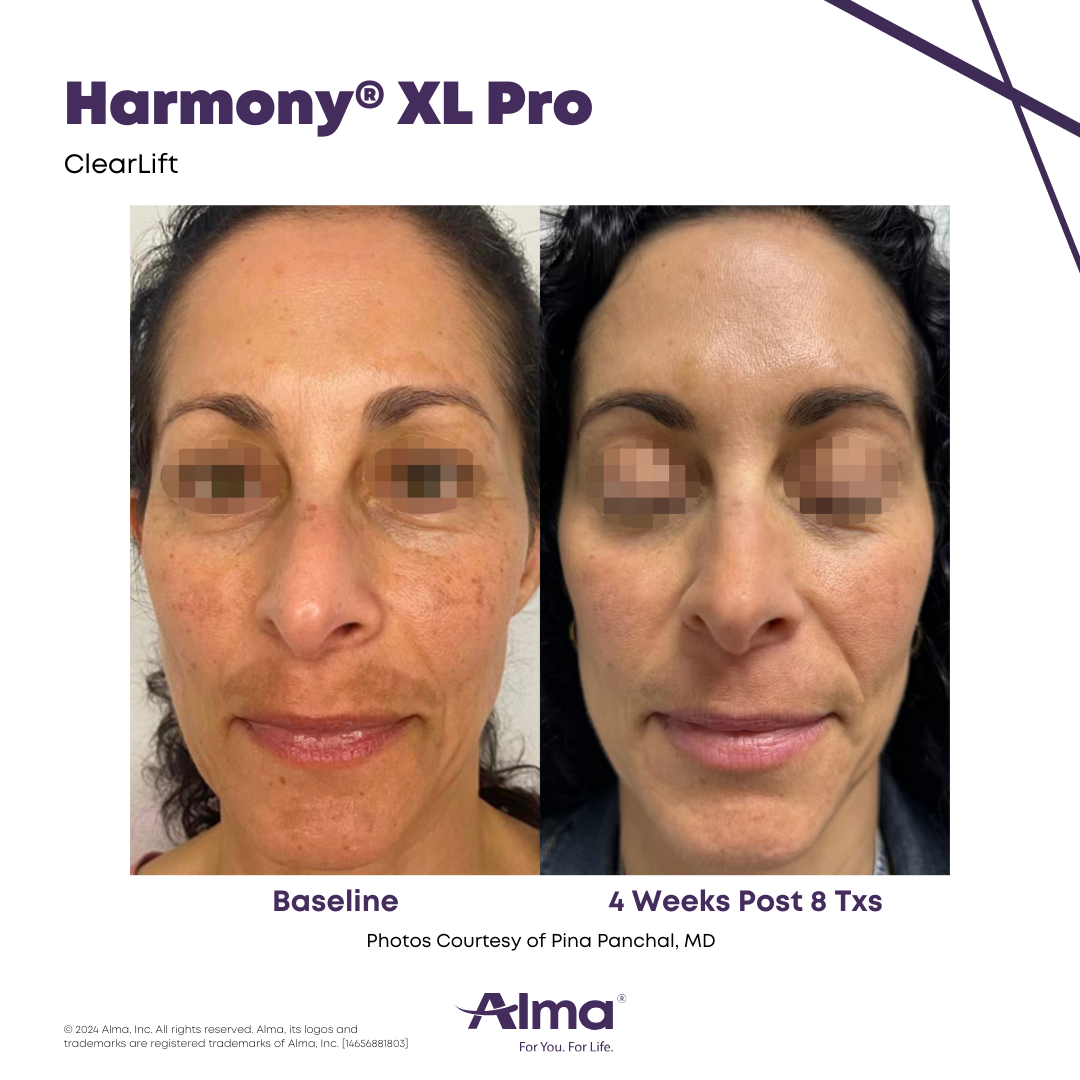
Brown spots, age spots, freckles, solar lentigines, and many cafe-au-lait lesions can be visibly cleared in one to three sessions with the Dye-VL applicator. Melasma is more complicated. Melasma is a chronic, hormonally-driven pigment disorder that does not respond predictably to traditional intense pulsed light. At APMUC we treat melasma cautiously with ClearLift, often in combination with a daily topical regimen, and we set expectations honestly: melasma is managed, not cured.
Skin rejuvenation and tightening
The Harmony XL Pro combines ClearLift (non-ablative Q-switched Nd:YAG), ClearSkin Pro Er:Glass (1,540 nanometer), ClearTite (near-infrared dermal heating), and NIR Face for collagen stimulation. Patients typically see firmer skin, smaller pores, and softer fine lines after one to three sessions, with continued improvement over the following three to six months as new collagen forms. This is not a facelift. It is a gradual, biological tightening that works best on early to moderate skin laxity. For more advanced laxity, a surgical referral is the right answer and we will tell you so.
Surgical and trauma scars
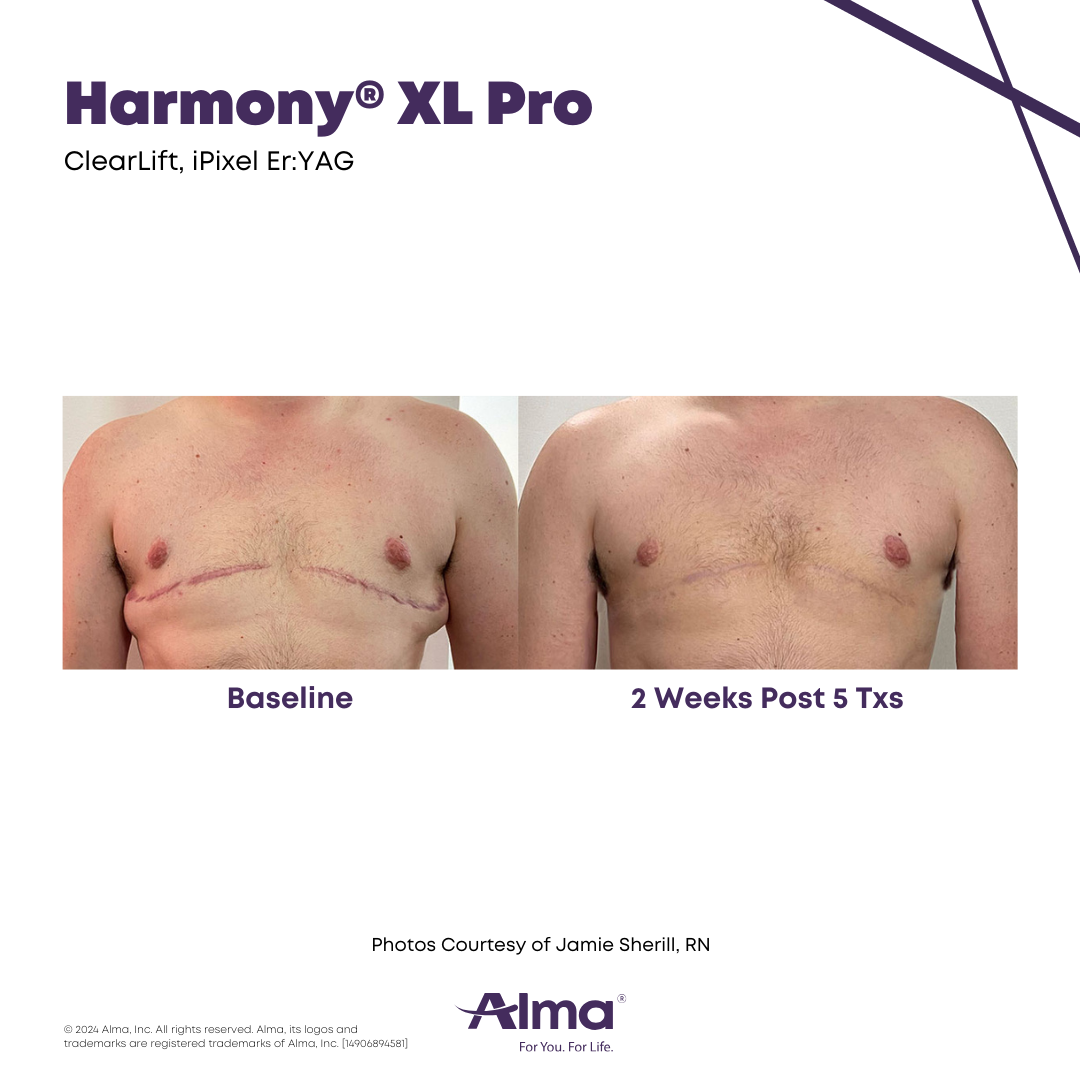
Scar revision with ClearLift and iPixel Er:YAG can soften, flatten, and re-pigment scars from C-sections, surgical incisions, trauma, and burns. Best results come from starting six to twelve weeks after the wound has closed and continuing every four to six weeks for a series of five to ten sessions.
Acne and acne scars
For active inflammatory acne, the AFT applicator delivers blue light at the wavelengths that destroy Propionibacterium acnes bacteria without antibiotics. A typical course is four to eight sessions over two to three months. Many patients pair AFT with the ClearSkin Pro Er:Glass laser, which also helps reduce sebaceous activity and the appearance of pores.
For acne scars, we use iPixel Er:YAG fractional resurfacing or ClearSkin Pro depending on scar depth, scar type, and your skin tone. Boxcar and rolling scars respond best. Ice-pick scars are the most stubborn and may require a combination of laser, subcision, and TCA cross. We assess this honestly at consultation.
Toenail fungus (onychomycosis)
The Cooled Long-Pulsed Nd:YAG 1,064 nanometer applicator heats the nail bed enough to weaken the fungus without damaging the nail. A typical course is three to four sessions spaced about a month apart. Visible new nail growth takes time because nails grow slowly, but most patients see clear new growth at the base of the nail by month three.
Why outcomes are better when a physician owns the room
This is the part of laser care most patients overlook. The laser is not what produces the result. The laser is a tool. The person operating the laser produces the result.
At APMUC, the laser is used inside a medical practice, supervised by a licensed physician. That means three things you cannot get at a spa.
- The right diagnosis. Not every brown spot is a sun spot. Not every red lesion is a vein. Not every acne is bacterial. A medical workup catches the cases that need a dermatology referral, a biopsy, or a different treatment entirely.
- The right contraindication screening. Pregnancy, recent sun exposure, photosensitizing medications such as doxycycline and isotretinoin, a personal or family history of keloid scarring, active herpes, and certain auto-immune conditions all change what laser settings are safe. Skipping that conversation is how patients end up with burns and hyperpigmentation.
- The right escalation. If a patient is not responding the way we expect, a physician can adjust the medical context, not just the laser settings. That includes prescribing pre-treatment hydroquinone for melasma patients, recommending sun protection regimens, and identifying when an outside referral is the right call.
This is what Dr. Shemiranei means when he says APMUC is a medical practice, not a med spa.
Safety, side effects, and what to expect after a session
Most patients leave their appointment with mild pink skin for two to six hours. Some develop temporary pinpoint crusting after pigment treatments (this is the targeted pigment lifting) and usually resolves within a week. Patients undergoing fractional resurfacing have a sandpaper texture for two to five days. Tattoo removal sites can blister briefly and we provide aftercare guidance for that.
Serious side effects are uncommon when treatments are performed by trained operators under physician supervision and matched to the patient’s skin type. The most common avoidable side effects in the broader laser industry are burns from incorrect settings and hyperpigmentation from treating recently tanned or sun-exposed skin. Both are addressed by the screening protocol every APMUC patient walks through at the consultation.
What laser treatment costs at APMUC
We do not list prices on this page on purpose. Laser care is not a one-price product. The right plan depends on which applicator, how many sessions, how large an area, and what your goals are. We believe medical-grade laser care should be accessible, and we offer affordable options for new and returning patients. Call 407-845-8623 or book online for a consultation and we will build a plan that fits your timeline and your budget.
Frequently asked questions
How fast will I see results from the Alma Harmony XL Pro?
Most patients see something visible after the first treatment, especially for hair removal, sun spots, and rosacea. Full results require a series, which is two to nine sessions depending on the treatment.
Is the Alma Harmony XL Pro safe for darker skin tones?
Yes. The platform is clinically validated for all Fitzpatrick skin types. The SHR Pro applicator in particular was designed for safe hair removal across the full range of skin tones, including patients who were turned away by older diode-only systems.
Will laser hair removal completely eliminate hair forever?
Laser hair removal produces a stable, long-term reduction in hair count. That is the FDA-cleared definition and it is the honest one. Most patients enjoy long stretches of no hair regrowth, sometimes for years, with occasional maintenance sessions.
How many tattoo removal sessions will I need?
For a typical professional tattoo, plan on six to twelve sessions spaced six to eight weeks apart. Amateur tattoos often clear in fewer sessions. Multi-colored tattoos take longer because each color requires the wavelength tuned for it.
Will the Alma Harmony XL Pro tighten loose skin without surgery?
The Harmony XL Pro tightens early to moderate skin laxity by stimulating new collagen with ClearTite, NIR Face, ClearLift, and ClearSkin Pro. It is not a substitute for a surgical facelift and we will tell you honestly if surgery is the better fit for your goals.
Can I treat more than one concern at the same appointment?
Yes. One advantage of a multi-applicator platform is that compatible treatments can be combined in a single visit. Common pairings include pigmentation correction plus skin rejuvenation, or vein treatment plus rosacea reduction.
Is there downtime after Alma Harmony XL Pro treatments?
For most Harmony XL Pro treatments, no. Mild pink skin for a few hours is typical. Fractional resurfacing with iPixel Er:YAG involves a few days of recovery with a sandpaper texture and we will set that expectation at your consultation.
Who is not a candidate for laser treatment?
Patients who are pregnant or breastfeeding, who have had recent significant sun exposure or used tanning beds, who have active skin infections at the treatment site, who are taking certain photosensitizing medications, or who have a personal or strong family history of keloid scarring may need to wait or choose a different approach. We screen for all of these at the consultation.
How do I book a laser consultation in Orlando, Florida?
Call 407-845-8623 or book online. APMUC is located at 1400 E Robinson Street, Orlando, Florida 32801, with same-week consultation availability.
Ready to talk to a physician?
Schedule a free Alma Harmony XL Pro consultation with Dr. Saied Shemiranei at APMUC in Orlando, Florida.
Want to book? Click the chat bubble on the right and a real person will set up your free consultation. Or use the button above to open the contact form, where you can pick a time directly from the calendar at the bottom of the page.