Laser Tattoo Removal: What Actually Happens Session by Session
What each laser tattoo removal session at APMUC in Orlando, Florida actually involves, from the first evaluation to aftercare, with an honest session-count estimate.
© Alma, Inc. All rights reserved. Alma and its logos are registered trademarks of Alma, Inc.
Laser tattoo removal is a multi-session process, not a single visit. Each session breaks ink into smaller particles that your body clears gradually over the following weeks. Your first visit is an evaluation, not a treatment, and published ranges run 6 to 10 or more sessions for a professional tattoo. APMUC gives you a starting estimate at consultation using factors from the Kirby-Desai scale, never a fixed promise, and revisits that plan at every visit as your tattoo actually responds.
Evaluation first
Dr. Shemiranei reviews your ink, skin type, and history before any laser touches your skin.
Short sessions
Each ClearLift session takes minutes, spaced weeks apart to let your body clear the ink.
6 to 10 or more
Published ranges for a professional tattoo, adjusted as your ink actually responds.
Color matters
Black and dark blue clear most reliably. Some greens, yellows, and light colors are more stubborn.
The question behind the question
Patients considering laser tattoo removal rarely ask “how does this laser work.” They ask “how many times am I going to have to come back, and what actually happens each time I do.” That is a fair question, and it deserves a real answer instead of a marketing number.
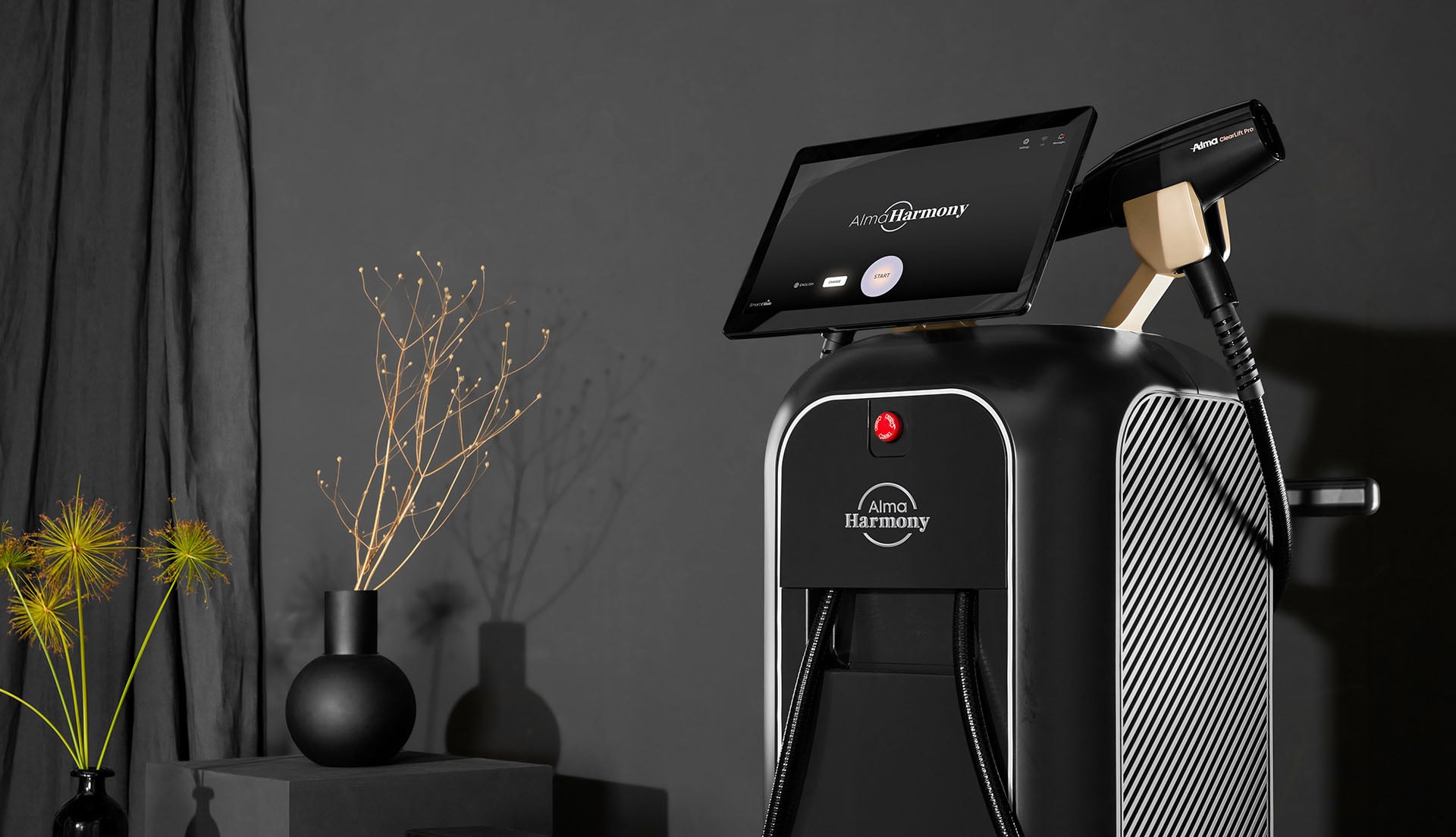
Laser tattoo removal is the use of a Q-switched laser, in APMUC’s case the ClearLift applicator on the Alma Harmony XL Pro, to fragment tattoo ink into particles small enough for the body’s own immune system to clear away over time. It is gradual by design. No single session removes a tattoo, and no responsible provider can tell you the exact number of visits you will need before actually examining your ink and skin in person.
This post walks through what happens at each stage, from your first call to your last follow-up, so you know what to actually expect before you book anything. It is the companion piece to our full laser tattoo removal service page, which covers candidacy, benefits, and limitations in more detail. If you have not read that page yet, it is worth a look alongside this one.
🔍 The first evaluation: what happens before any laser touches your skin
Before your first treatment, you complete a documented medical evaluation with Dr. Saied Shemiranei, medical director and founder. This is not a five-minute look at your tattoo across a counter. It is a real assessment that covers your skin type, the tattoo’s ink colors and layering, your scarring history, and any current tan or recent sun exposure at the treatment site.
A physician-led evaluation exists to catch problems before they happen, not after. Choosing the wrong wavelength or settings for a patient’s skin tone, or missing a contraindication during screening, can cause the exact complications a patient came in hoping to avoid. That is the reason this step happens in person and on the record, every time, for every new tattoo removal patient.
Practically, the evaluation covers:
- Your tattoo’s ink colors and how much ink is present
- The tattoo’s location on your body
- How deep and how layered the ink appears, including any prior cover-up work
- Your Fitzpatrick skin type
- Any personal history of keloid or hypertrophic scarring
- Whether the treatment site is currently tanned or has had recent significant sun exposure
Most of these factors also feed directly into your session-count estimate, which is the next thing that happens at this same visit.
📅 Your starting estimate: the Kirby-Desai scale, used honestly
Once your evaluation is complete, Dr. Shemiranei gives you a starting session-count estimate using factors from the published Kirby-Desai scale, a clinical framework that scores variables like skin type, tattoo location, ink amount and color, and scarring history to project a likely number of sessions (Kirby et al., Journal of Clinical and Aesthetic Dermatology, 2009).
The Kirby-Desai scale is a starting framework, not a guarantee. It is one of the only published, evidence-based tools that turns “it depends” into an actual number tied to specific, named variables instead of a guess. That said, more recent research has re-examined the original scale against current-generation lasers and found it can overestimate the sessions actually needed (Egozi and Toledano, Journal of Cosmetic Dermatology, 2024). APMUC uses the scale as a starting point, then adjusts the plan as your tattoo actually responds, session by session.
Published ranges for Q-switched laser treatment on a professional tattoo typically run 6 to 10 or more sessions, and some tattoos need considerably more depending on size, color, and layering (FDA, Tattoos and Permanent Make-up). Amateur tattoos with less ink density often clear faster than professional work. None of this replaces an in-person look at your specific tattoo, which is why the estimate comes after the evaluation, not before it.
⚡ What a typical treatment session actually feels like
Once your plan is set, treatment sessions themselves are short. Each session targets the treatment area with the Q-switched Nd:YAG ClearLift applicator on the Alma Harmony XL Pro, delivering extremely short, high-energy pulses to the ink.
The laser does not erase ink. It shatters it, and your body does the rest.
Here is the mechanism in plain terms. The ClearLift applicator’s nanosecond pulses create a photoacoustic effect, essentially a rapid mechanical shockwave, that fragments tattoo ink particles into smaller pieces in the dermis. Histologic studies of Q-switched Nd:YAG treatment confirm this fragmentation pattern, and show the smaller ink particles are then taken up by macrophages and carried away through the lymphatic system over the following weeks (British Journal of Dermatology, 1997; Indian Journal of Dermatology review).
That mechanism is also why a single pass cannot finish the job. Each session only clears what your body’s own immune response can pick up from the previous round. This is confirmed directly in the manufacturer’s own product documentation: Alma describes its ClearLift applicator as a leading Q-switched Nd:YAG treatment solution, delivering “intense nanosecond pulses to the target area resulting in a photo acoustic effect,” with unwanted tattoo removal named as one of its cleared indications (Alma Lasers, Harmony XL Pro Special Edition B2B brochure, manufacturer documentation on file in the ROAR | C | APMUC project space).
As for what it feels like, pain tolerance varies by person and by treatment location on the body. Many patients describe the sensation as similar to a rubber band snapping against the skin. Topical numbing can be requested for sensitive areas, and most patients return to normal activities the same day, with mild redness or swelling at the treatment site that typically resolves within a few hours to a few days.
⏰ Why sessions are spaced weeks apart, not days
Your body needs time between sessions to actually clear the ink your last treatment broke loose. That clearance process, through the lymphatic system, takes weeks, not days. Treating too soon, before that clearance has finished, does not speed up your results. It just re-treats ink your body has not had a chance to remove yet, which is why every APMUC tattoo removal plan spaces sessions weeks apart rather than back to back.
This spacing is also when your provider tracks your progress. At each visit, your ink’s response to the prior session is assessed against your original Kirby-Desai-based estimate. Some tattoos clear faster than the initial projection. Others need more sessions than first estimated, especially if they include a mix of ink colors or heavy layering from a prior cover-up. Either way, the plan gets revisited at each visit rather than left on autopilot.
🎨 Why some ink colors take longer than others
Not every color in your tattoo will respond the same way to treatment, and that is worth understanding before you count on a specific finish line.
No single laser removes every ink color equally well. Black and dark blue or blue-black ink respond most reliably to Q-switched Nd:YAG treatment. Lighter colors such as yellow, green, and some reds are more resistant, and may respond more slowly or not fully clear even after many sessions (Indian Journal of Dermatology clinical update; FDA). If your tattoo has multiple colors, expect the darker sections to fade first and the resistant colors to take the longest, which can make progress look uneven from one session to the next even though the plan is working as expected.
🩺 Why skin tone changes the plan, not the eligibility
Q-switched Nd:YAG treatment can be performed on darker skin tones, but the risk of temporary, or less commonly lasting, pigment changes is higher in Fitzpatrick skin types IV through VI (NIH StatPearls; post-inflammatory hyperpigmentation review). This does not rule someone out. It changes how the plan is built.
Darker skin tones require individualized wavelength and settings, not a different eligibility standard. Dr. Shemiranei selects the wavelength and settings for your specific skin type at your evaluation and discusses this risk with you directly before any treatment begins, exactly the kind of individualized decision a physician-led evaluation is designed to make.
Patients with a history of keloid or hypertrophic scarring are at elevated risk for scarring with laser treatment and require additional screening for the same reason (hypertrophic scarring review). This is one more reason the first evaluation matters as much as it does.
✅ What to ask before your first session, wherever you go
If you are comparing providers, these are worth asking directly:
- Who performs the evaluation and the treatment, and is that person a physician?
- Is there a documented medical history and skin evaluation before the first session?
- What specific laser and applicator is used, and is it FDA-cleared for tattoo removal?
- How is my session-count estimate calculated, and is it based on a published clinical framework?
- What happens if my skin tone or scarring history changes the plan?
- What does aftercare actually involve, and who do I contact if something looks wrong?
A provider who cannot answer these clearly, or who gives you a fixed number of sessions before ever looking at your tattoo in person, is skipping a step that matters.
🪥 Aftercare: what happens after you leave
You receive specific aftercare instructions after each session, and your progress is tracked at every subsequent visit. Mild redness or swelling at the treatment site is common in the first few hours to days. Beyond the immediate post-treatment period, aftercare is mostly about protecting the treated skin (particularly from sun exposure) while your body works through the clearance process described above, and reporting anything unexpected before your next scheduled session rather than waiting.
How we approach this at APMUC
Laser tattoo removal is a medical procedure, and APMUC treats it that way from the first phone call. Every new tattoo removal patient completes a documented medical evaluation with Dr. Saied Shemiranei before the first treatment, gets a session-count estimate built from a published clinical framework rather than a guess, and has that plan revisited at every visit as their tattoo actually responds.
This is also why APMUC does not publish a fixed session count or a guaranteed clearance timeline anywhere on our site, including here. Laser tattoo removal is gradual by nature, and no responsible provider can promise a specific number of sessions or full clearance before evaluating your specific tattoo and skin in person. If you are considering laser tattoo removal in Orlando, Florida, the full laser tattoo removal service page covers candidacy, benefits, and limitations in more depth, and our laser treatments page covers the full Alma Harmony XL Pro platform APMUC uses across tattoo removal, hair removal, and vein treatment.
New patients are welcome, and most consultations start with a free 15-minute phone call before any in-person visit is scheduled.
Frequently asked questions
How many sessions will laser tattoo removal actually take?
Direct answer: Most professional tattoos need roughly 6 to 10 or more sessions, but your actual number comes from an in-person evaluation, not a fixed promise.
It depends on your tattoo’s ink colors, size, location, depth, and your own skin type. Published ranges for Q-switched laser treatment are typically 6 to 10 or more sessions for a professional tattoo, spaced weeks apart (FDA). Dr. Shemiranei gives you a specific starting estimate at your evaluation using factors from the Kirby-Desai scale, then revisits that plan at each visit as your tattoo responds.
How long do I have to wait between sessions?
Direct answer: Weeks, not days, because your immune system needs that time to clear each round of broken-down ink.
Sessions are spaced weeks apart to give your body time to clear the ink fragments broken loose by the previous treatment through the lymphatic system. Treating again too soon does not speed up results, it just re-treats ink your body has not finished clearing yet.
What does a single treatment session actually feel like?
Direct answer: Most patients describe it as similar to a rubber band snap, and normal activities can usually resume the same day.
Pain tolerance varies by person and by treatment location. Many patients describe the sensation as similar to a rubber band snapping against the skin. Topical numbing can be requested for sensitive areas, and most patients return to normal activities the same day.
Why does my tattoo need an in-person evaluation before I get a session-count estimate?
Direct answer: Because your specific ink, skin, and history all change the estimate, and none of that can be assessed accurately from a photo or a phone call alone.
Because the estimate depends on factors that only a physician can assess accurately in person: your ink colors, tattoo depth and layering, skin type, scarring history, and whether the treatment site is currently tanned or recently sun-exposed. All of these change the plan.
Will every color in my tattoo clear at the same rate?
Direct answer: No, darker colors typically clear faster than lighter or more resistant colors like yellow and green.
No. Black and dark blue or blue-black ink respond most reliably to Q-switched Nd:YAG treatment. Lighter colors such as yellow, green, and some reds are more resistant and may respond more slowly, or in some cases not fully clear even after many sessions.
Is laser tattoo removal safe if I have darker skin?
Direct answer: Yes, with individualized wavelength and settings selection, and a direct conversation about elevated pigment-change risk before treatment begins.
Q-switched Nd:YAG treatment can be performed on darker skin tones, but the risk of temporary, or less commonly lasting, pigment changes is higher in Fitzpatrick skin types IV through VI. Dr. Shemiranei selects the wavelength and settings for your specific skin type and discusses this risk with you directly before any treatment.
Is the Kirby-Desai scale a guarantee of how many sessions I will need?
Direct answer: No, it is a starting estimate based on published research, not a fixed promise, and your actual plan is adjusted session by session.
No. It is a published clinical framework that scores factors like skin type, tattoo location, ink amount and color, and scarring to estimate a likely session range. More recent research suggests the original scale can overestimate sessions needed with current-generation lasers, so APMUC uses it as a starting framework and adjusts the plan as your tattoo actually responds.
What happens if my tattoo is not responding the way the estimate predicted?
Direct answer: Your plan is reassessed at every visit, so a slower or faster response than predicted simply adjusts the sessions ahead, it does not derail the process.
Your provider tracks your progress at every visit and revisits your original estimate as needed, because Kirby-Desai-based projections are a starting point, not a locked plan. If your ink is clearing faster or slower than expected, that gets factored into your remaining sessions.
Book your tattoo removal consultation
Schedule a free consultation with Dr. Saied Shemiranei, medical director and founder, at APMUC in Orlando, Florida. Affordable options are available for new and returning patients.
Want to book? Click the chat bubble on the right and a real person will set up your free consultation. Or use the button to open the contact form, where you can pick a time directly from the calendar at the bottom of the page.