
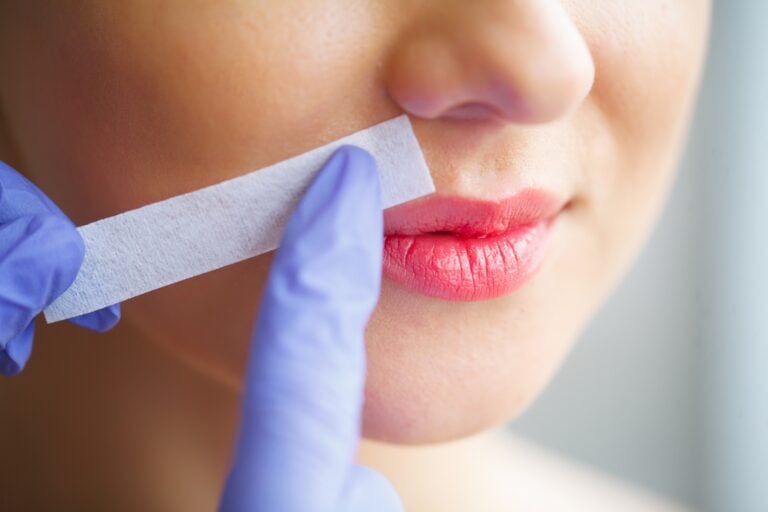
There must be a better way
You have sat in the waxing chair and braced for it. You have booked the med spa appointment where a laser tech you have never met before runs a device over your skin for fifteen minutes and sends you home. Neither one felt like healthcare. Both left you wondering if there was a better way to get rid of unwanted hair without dreading the appointment.
There is. At APMUC in Orlando, Florida, laser hair removal is performed on the Alma Harmony XL Pro under the supervision of Dr. Saied Shemiranei, medical director and founder. The technology was engineered to reduce pain, and the oversight behind it is medical, not cosmetic. This article covers why wax hurts, what actually causes laser pain, how the Harmony XL Pro’s SHR technology changes that, why physician oversight matters for skin type and hormonal factors like PCOS, and what a realistic timeline looks like.
📋 TL;DR key takeaways
- Wax pulls hair out by force. That is why it hurts, every time, at every session. Laser hair removal disables the follicle instead, so the pain mechanism is fundamentally different.
- The Alma Harmony XL Pro’s SHR applicator delivers gradual, lower-energy pulses with continuous cooling. Most patients describe sessions as warm pressure rather than the sharp snap of older, single-pulse lasers.
- The device is FDA-cleared for permanent hair reduction, not permanent removal. That distinction matters, and any provider who promises otherwise is not being accurate.
- Most patients need roughly six to eight sessions spaced four to eight weeks apart. Hormonal conditions like PCOS often require more.
- Physician oversight means real screening, not a sales checklist. Skin type, medications, pregnancy status, and hormonal history all change whether and how treatment should proceed.
- A med spa is built around throughput. A medical practice is built around the patient in the chair. That difference is the whole argument for physician-led laser care.
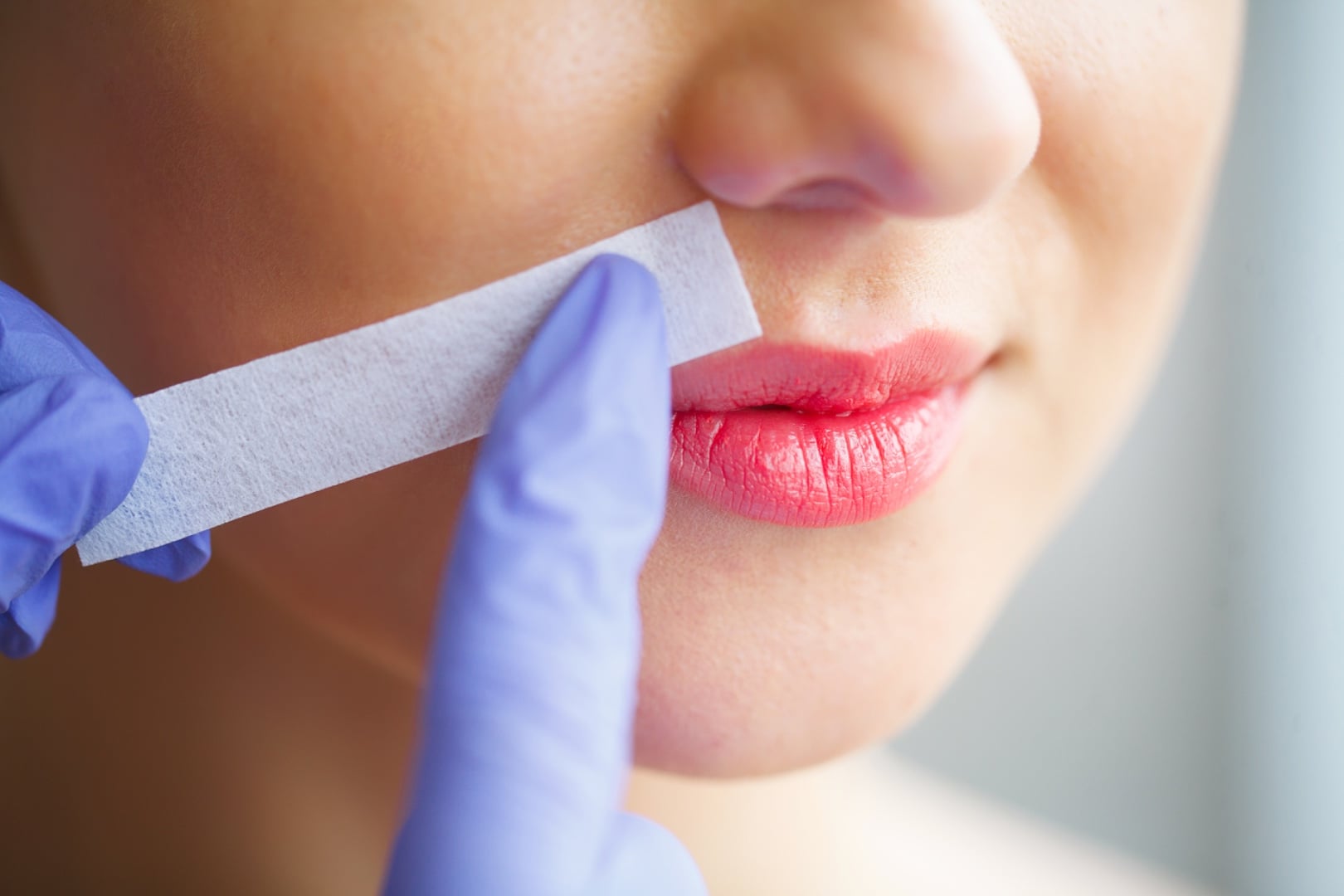
Traditional waxing pulls hair out by force, every time, at every session.
The wax problem
Waxing works by ripping hair out of the follicle by force. There is no way around the mechanism. Every hair, every session, pulled out at the root and torn off. The pain is not a side effect of a bad technician or the wrong wax temperature. It is the method.
Wax also brings its own downstream problems: ingrown hairs, folliculitis, torn skin on sensitive areas, and a growth cycle that returns the entire treatment to square one every three to six weeks. It never gets easier because it never targets the follicle itself. It only removes what has already grown.
Laser hair removal works on a different principle. Instead of pulling hair out, a laser targets the melanin inside the hair follicle with light energy, heats it, and disables the follicle’s ability to keep producing hair. Done correctly, this leads to the FDA’s approved term: permanent hair reduction. Not permanent removal. A long-term, stable decrease in hair regrowth after a full series of sessions, measured at six, nine, and twelve months post-treatment (FDA 510(k) Summary, K180353).
⚡ What actually makes lasers hurt, and how Alma’s technology reduces it
Older laser hair removal systems, including many still used in med spas around Orlando, Florida, work by firing a single high-energy pulse directly into the skin. That single strong pulse is what causes the sharp snap most people remember and dread. It is also what makes those systems riskier on darker or tanned skin, because a strong pulse absorbed too quickly by melanin can overheat the surrounding tissue.
The Alma Harmony XL Pro’s SHR, or Super Hair Removal, applicator works differently. Rather than one intense pulse, SHR delivers hair-reduction energy through multiple gradual, lower-fluence pulses while the practitioner glides the applicator continuously across the skin, a technique Alma calls In-Motion. Heat builds progressively in the hair follicle instead of spiking all at once, reaching a temperature that disables the follicle without concentrating enough heat in one spot to burn the skin (Alma Lasers SHR technology overview). A sapphire-tipped contact-cooling surface keeps the skin-surface temperature controlled throughout the pass, which the platform’s own technology page identifies as a major contributor to patient comfort.
Clinical research on gradual, in-motion energy delivery backs up what patients report. A comparative study of traditional versus in-motion Nd:YAG hair removal found the in-motion technique reduced patient-reported pain scores while maintaining comparable hair reduction outcomes (Zappia et al., 2022, Medicina). A separate comparison of SHR-mode treatment against alexandrite and Nd:YAG lasers for leg hair reduction found SHR delivered comparable efficacy with a lower side-effect profile (Ozuguz, Kacar, and Karaca, 2012, Balkan Medical Journal). Most patients describe a Harmony XL Pro hair removal session as warm pressure, closer to a hot stone than a snap, and tolerate SHR sessions with little to no discomfort compared with older stamping-mode lasers.
The Alma Harmony platform’s SHR applicator is clinically validated across the full Fitzpatrick scale, from type I through type VI, when the correct applicator and parameters are selected for the patient (FDA 510(k) Summary, K180353).
🩺 Why physician oversight matters
A laser is only as safe as the person choosing the settings. This is where a med spa and a medical practice truly differ.
Skin type screening. The Harmony XL Pro is clinically validated across the full Fitzpatrick scale, but validated for a device is not the same as automatically safe for every setting on every patient. The correct wavelength, fluence, and pulse structure still have to be matched to an individual’s skin tone and hair characteristics at every session. At APMUC, that matching happens under physician-reviewed protocol, with a test spot performed before the first full-area treatment.
Hormonal factors, including PCOS. Unwanted hair growth is sometimes a symptom of an underlying hormonal condition, not just a cosmetic preference. Polycystic ovary syndrome and other androgen-related conditions can drive ongoing hair growth that behaves differently than typical hair. A systematic review of laser and light-based therapies for hirsutism in women with PCOS found meaningful improvement, though study designs varied and more sessions were generally needed than in non-hormonal cases (Tan et al., 2024, JAMA Dermatology). A physician-led practice is positioned to recognize these patterns and fold them into the treatment plan and session expectations, rather than simply running the laser and moving to the next appointment.
Pregnancy and breastfeeding. Laser hair removal is not recommended during pregnancy or breastfeeding. There is no safety data supporting its use in pregnant patients, and pregnancy hormones disrupt the hair-growth cycle the laser depends on (Trivedi, Kroumpouzos, and Murase, 2017, International Journal of Women’s Dermatology). Pregnancy status is screened at consultation, before any treatment is scheduled.
Side effect management. Contraindications exist beyond pregnancy. Certain photosensitizing medications, active skin infection at the treatment site, recent significant sun exposure, recent tanning-bed use, and a history of keloid scarring all change whether or how treatment should proceed. Screening for these factors is a medical judgment, and at APMUC that judgment sits with Dr. Shemiranei’s supervised protocol, not a sales coordinator’s checklist.
This is the plain difference between a med spa model and a physician-led model. A med spa is built around throughput. A medical practice is built around the patient in the chair.
✅ What to ask before you book anywhere
Use this checklist at any provider, not just APMUC, before you commit to a laser hair removal package.
- Is a physician involved in reviewing my treatment plan, or only a technician?
- What Fitzpatrick skin type validation does the device have, and is it appropriate for my skin tone?
- Will you screen me for pregnancy, medications, and hormonal conditions like PCOS before treatment?
- What happens if I have a hormonal condition that needs more sessions than average?
- Will you perform a test spot before treating a full area?
- What is the realistic session range for someone with my hair and skin type, not a generic package number?

The Alma Harmony XL Pro’s applicator bay at APMUC. Physicians and trained staff select the applicator and settings for each patient’s skin type and treatment area.
🗓️ Realistic session count and expectations
No one can promise a specific number of sessions before seeing a patient’s hair type, skin tone, and treatment area. What the evidence does support is a general range.
Most patients need roughly six to eight sessions, spaced four to eight weeks apart, to reach substantial reduction. Coarser, darker hair tends to respond faster than fine or light hair, because there is more melanin in the follicle for the laser to target. One cited study of six consecutive sessions in darker skin phototypes IV-V reported the success rate climbing from 5 percent after three sessions to 56 percent after six sessions, illustrating why a full series matters more than any single dramatic setting change (Ozuguz, Kacar, and Karaca, 2012, Balkan Medical Journal). A related study using long-pulsed Nd:YAG treatment across multiple sessions in Indian patients with a range of hair types reported comparable multi-session clearance patterns (Mittal, Sriram, and Sandhu, Journal of Cutaneous and Aesthetic Surgery).
Hormone-driven hair growth, particularly from PCOS or other androgen-related conditions, typically requires more sessions than non-hormonal hair to achieve comparable reduction, and can regrow or require touch-up sessions even after a completed series (Tan et al., 2024, JAMA Dermatology).
Individual results vary by skin type, hair characteristics, hormonal factors, and how closely a treatment plan is followed. Nobody at APMUC will guarantee a specific outcome before an in-person consultation, and no page on this site promises one.
🔍 What a first visit looks like
A first visit at APMUC starts with a free fifteen-minute phone consultation, not a treatment. Dr. Shemiranei’s team discusses your goals, treatment areas, and any medical history affecting candidacy.
The in-person visit that follows includes a skin type and hormonal screening: Fitzpatrick skin type, current medications, hormonal factors, PCOS, and other androgen-related conditions that can affect hair growth and session planning. A small test spot is treated first to confirm safe and effective parameters for your specific skin and hair before a full treatment area is started.
From there, your provider builds a session plan and interval based on skin type, hair color, hair thickness, and treatment area, not a generic package. Sessions themselves are short and use In-Motion delivery and contact cooling to maximize comfort. Most patients return to normal activity the same day, with mild redness at the treatment site that typically resolves within a few hours.
Before treatment, avoid sun exposure, tanning beds, and waxing, plucking, or threading in the weeks leading up to your appointment, since the laser needs an intact hair follicle to target. After treatment, use sun protection and avoid harsh exfoliation for a short period, with specific instructions from your provider based on your skin and treatment area.
How we approach this at APMUC
Laser hair removal at APMUC is not a stand-alone spa service. It runs through the same physician-led workup as any other treatment we offer: a documented consultation, contraindication screening, a written treatment plan, and session-by-session tracking in your medical record. Every laser protocol is reviewed and supervised by Dr. Saied Shemiranei, medical director and founder, and the team will tell you directly if laser hair removal is not the right fit for your skin or goals rather than selling a package anyway.
If you want the full technical rundown of why we chose the Alma Harmony XL Pro platform across all of our laser services, read why APMUC chose the Alma Harmony XL Pro. For the complete treatment protocol, technology detail, and areas we treat specific to hair removal, visit our painless laser hair removal service page, where you can also request your free consultation online.
Frequently asked questions
Does laser hair removal really hurt less than waxing?
For most patients, yes. Waxing pulls hair from the root by force. The Harmony XL Pro’s SHR technology delivers gradual, lower-energy pulses with continuous contact cooling, which most patients describe as warm pressure rather than sharp pain. Comfort still varies by treatment area and individual pain tolerance, and some sensitive areas may involve mild discomfort.
Direct answer: Yes, for most patients. SHR’s gradual, cooled energy delivery is fundamentally less painful than wax pulling hair out by force.
Is laser hair removal actually permanent?
The FDA-cleared and medically accurate term is permanent hair reduction, a long-term, stable decrease in regrowth measured at six, nine, and twelve months after a completed treatment series. It is not a guaranteed, lifelong absence of every hair, and no provider should promise otherwise.
Direct answer: No device is FDA-cleared for permanent removal, only permanent hair reduction, a stable long-term decrease in regrowth.
Is this safe for darker or tanned skin?
The Alma Harmony device’s SHR applicator is FDA-cleared and clinically validated for use on all Fitzpatrick skin types, I through VI, when the correct applicator and parameters are selected for the patient. Gradual, cooled energy delivery reduces the burn and hyperpigmentation risk that older, single-pulse systems carry on darker skin.
Direct answer: Yes. SHR on the Harmony XL Pro is validated across Fitzpatrick I through VI with the correct settings for each patient.
How many sessions will I actually need?
Most patients need roughly six to eight sessions spaced four to eight weeks apart. Coarser, darker hair typically responds faster. Hormonal conditions like PCOS often require more sessions. Your exact plan depends on your hair and skin characteristics, assessed at consultation.
Direct answer: Roughly six to eight sessions, four to eight weeks apart, though hormonal conditions like PCOS often need more.
Can I get laser hair removal while pregnant or breastfeeding?
No. Laser hair removal is not recommended during pregnancy or breastfeeding. There is no safety data supporting its use in pregnant patients, and pregnancy hormones disrupt the hair-growth cycle the laser targets. Pregnancy status is screened at consultation.
Direct answer: No. It is not recommended during pregnancy or breastfeeding due to a lack of safety data and hormone-driven changes to the hair cycle.
Does PCOS or another hormonal condition affect treatment?
Yes. PCOS and other hormonal conditions can drive ongoing androgen-related hair growth that typically requires more sessions than non-hormonal hair. A systematic review found meaningful improvement in hirsutism among women with PCOS, though study designs varied and more sessions were generally needed.
Direct answer: Yes. PCOS-driven hair growth generally needs more sessions, though most patients still see meaningful improvement.
Why does physician oversight matter for something this routine?
Because it is not routine for everyone. Skin type, medication use, pregnancy status, hormonal factors, and contraindications all change what a safe plan looks like. A medical practice screens for those factors before every treatment. A med spa is not required to.
Direct answer: Because skin type, pregnancy, medications, and hormonal conditions all change what is safe, and only a physician-led practice is set up to screen for all of them.
Book your free consultation
If wax has never worked and a med spa left you with more questions than answers, a physician-led evaluation is the next step. Dr. Saied Shemiranei’s team will review your skin, goals, and history, and build a plan without guessing.
Call 407-845-8623 or request your free 15-minute phone consultation online. APMUC is located at 1400 E Robinson Street, Orlando, Florida 32801, open Monday through Friday, 9am to 5pm.
Learn more about the technology behind every laser treatment we offer at our painless laser hair removal service page, and see the full platform rationale at why APMUC chose the Alma Harmony XL Pro.
Medical disclaimer
This content is for educational purposes only and is not medical advice. All treatment decisions must be made in consultation with a licensed physician. Individual laser hair removal results vary by skin type, hair characteristics, hormonal factors, and treatment protocol. If you are experiencing a medical emergency, call 911.
Reviewed by
Reviewed by Dr. Saied Shemiranei, medical director and founder, Advance Preventive Medicine and Urgent Care (APMUC), 1400 E Robinson Street, Orlando, Florida. Dr. Shemiranei speaks English, Spanish, Farsi, French, and Portuguese.
Last updated: July 20, 2026.
Citations
- U.S. Food and Drug Administration. 510(k) Summary, Diode Laser Hair Removal Device, K180353. Permanent hair reduction indication and definition. https://www.accessdata.fda.gov/cdrh_docs/pdf18/K180353.pdf
- Zappia, E., Cannarozzo, G., Bennardo, L., Silvestri, M., Marigliano, M., Nistico, S., Bennardo, S. (2022). Comparing Traditional and in Motion Nd:YAG Laser in Hair Removal: A Prospective Study. Medicina, 58(9), 1205. https://pmc.ncbi.nlm.nih.gov/articles/PMC9503442/
- Ozuguz, P., Kacar, S., Karaca, S. (2012). Comparison of SHR Mode IPL System with Alexandrite and Nd:YAG Lasers For Leg Hair Reduction. Balkan Medical Journal. https://pmc.ncbi.nlm.nih.gov/articles/PMC4115894/
- Mittal, R., Sriram, S., Sandhu, K. Evaluation of Long-pulsed 1064 nm Nd:YAG Laser-assisted Hair Removal vs Multiple Treatment Sessions and Different Hair Types in Indian Patients. Journal of Cutaneous and Aesthetic Surgery. https://pmc.ncbi.nlm.nih.gov/articles/PMC2840900/
- Tan, K., Coster, T., Mousa, A., et al. (2024). Laser and Light-Based Therapies for Hirsutism Management in Women With Polycystic Ovarian Syndrome: A Systematic Review. JAMA Dermatology, 160(7), 746-757. https://pubmed.ncbi.nlm.nih.gov/38630483/
- Trivedi, M.K., Kroumpouzos, G., Murase, J.E. (2017). A review of the safety of cosmetic procedures during pregnancy and lactation. International Journal of Women’s Dermatology, 3(1), 6-10. https://pmc.ncbi.nlm.nih.gov/articles/PMC5418954/
- Alma Lasers. SHR (Super Hair Removal) Technology Overview. https://almalasers.com/tech/shr/
- APMUC. Painless Laser Hair Removal service page. https://apmuc.com/services/laser-hair-removal-orlando/
- APMUC. Why APMUC Chose Alma Harmony XL Pro for Laser Care. https://apmuc.com/why-alma-harmony-xl-pro-orlando-laser-platform/